
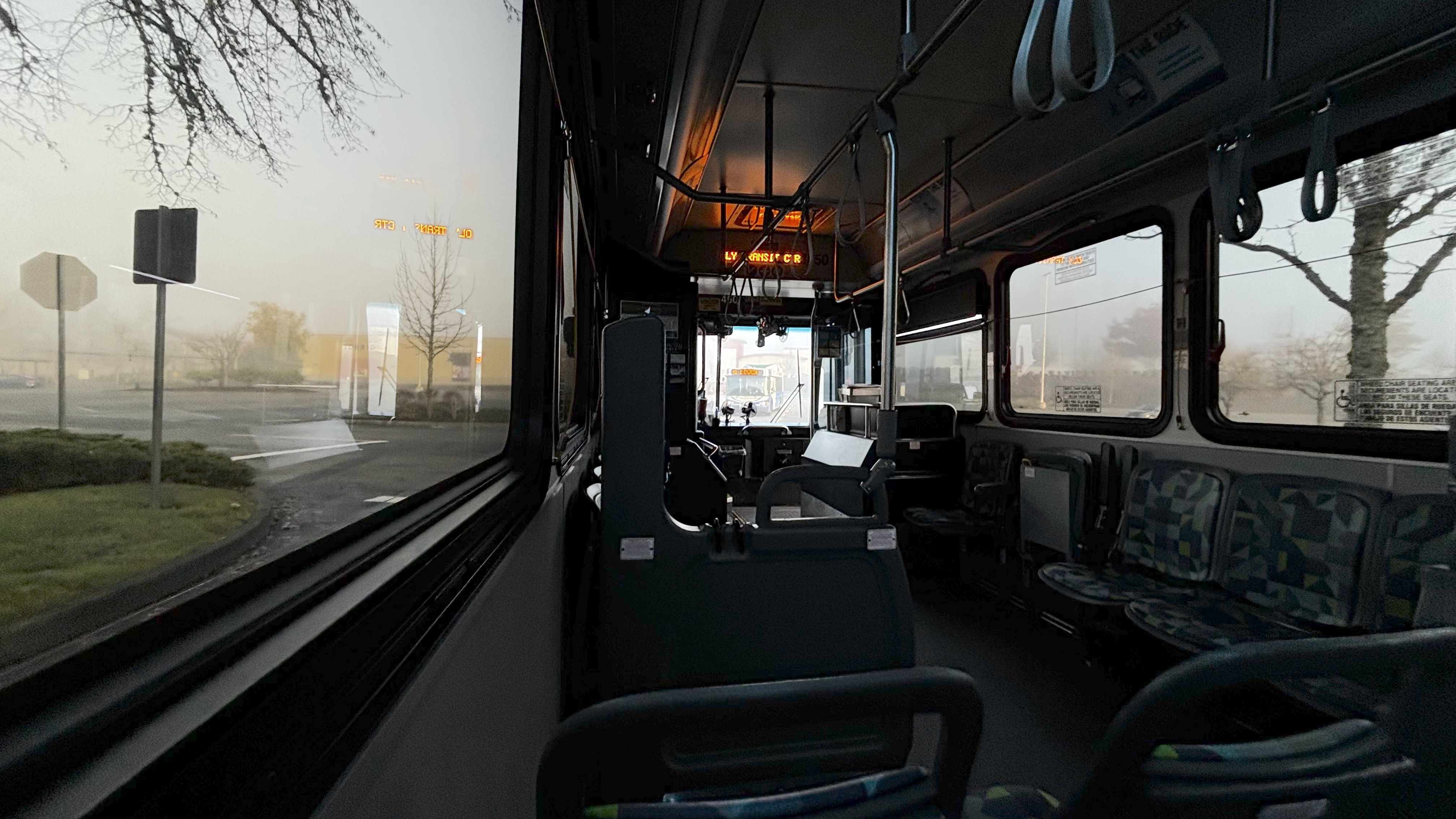
Transit Rider Representation on Public Transit Boards
“Because many on [transit] boards tend to be car drivers, they really haven’t internalized what it means to be a transit rider. Those decisions determine whether you as a transit rider are going to be able to keep a job, going to be able to continue to be a caregiver, going to be able to continue to go to school.” – Judy, Washington nondriver
Disability Rights Washington is continuing to champion legislation that would add transit rider representation to transit agency boards. Nobody wants transit to succeed more than the people who rely on it day in and day out, but our voices are continually left out of decision-making processes.
In Washington, a Public Transit Benefit Areas (PTBA) is a governing body established by state code to create and run transit agencies. Thirty-one out of Washington State’s 38 Transit agencies are governed under the PTBA structure. By Washington state law, these transit agency boards are composed of local elected officials, many of which don’t often ride transit. While many transit agencies support citizen advisory committees (CACs) for community member input, there is no assurance that community feedback will be incorporated into decision-making. Our proposed legislation would amend Washington state law to allow PTBAs to appoint two voting members to their governing boards, one who is transit-reliant and one from an organization that serves transit-reliant communities.
Read more about why we support this legislation in this Op-Ed in the Urbanist.
Ending Exclusionary Employment Practices with Unnecessary Driver License Requirements
“We know how to reliably get ourselves places, if you put us in a city that has accessible transportation. We manage it. And even those who may not have the best transportation like public transit. They also manage it sometimes. It is unfair to blanket cars as the only reliable means of transportation.” – Dwayne, Washington nondriver
We are proposing legislation to extend that protection to all job seekers and prohibit all employers from requiring driver’s licenses for jobs when driving is not an essential job function. This will build on the executive orders Governor Inslee signed banning unnecessary driver’s license requirements for state government jobs as part of a package to increase employment opportunities for people with disabilities and others who have been excluded by systemic barriers.
Thirty percent of Washington residents do not have a driver’s license. People with disabilities are four times more likely to not drive a car, two to three times more likely to live in a zero-vehicle household, and a third less likely to be employed. People without driver licenses, regardless of disability status, are more likely to be black, indigenous and people of color. Yet a driver’s license requirement is often the default in job descriptions or used as a “just in case” qualification on the chance an employee is asked to perform a task outside of their job duties. As we know from our own experiences, unnecessary driver’s license requirements reject qualified disabled and BIPOC candidates while dissuading others from applying altogether.
Read more about why driver’s license requirements matter in this essay in Governing.